
Me, Ben Kirman, Christian Remy, and Callum Nash developed a collection of fictional abstracts as short provocations to develop snapshots of how academic writing might consider the gig economy in possible futures.
Playing with fictional abstracts
At the time I was working on last mile logistics projects at the time gig economy and developing my design research practice. The collaborative writing of these fictional abstracts was a safe and contained way to explore speculative design in microcosm.
Everyday Datafied Digital Service Design: Embracing resistance when designing for the productive societal contributions of ex-workers
Alternative Cybernetics Research Cooperative, UK
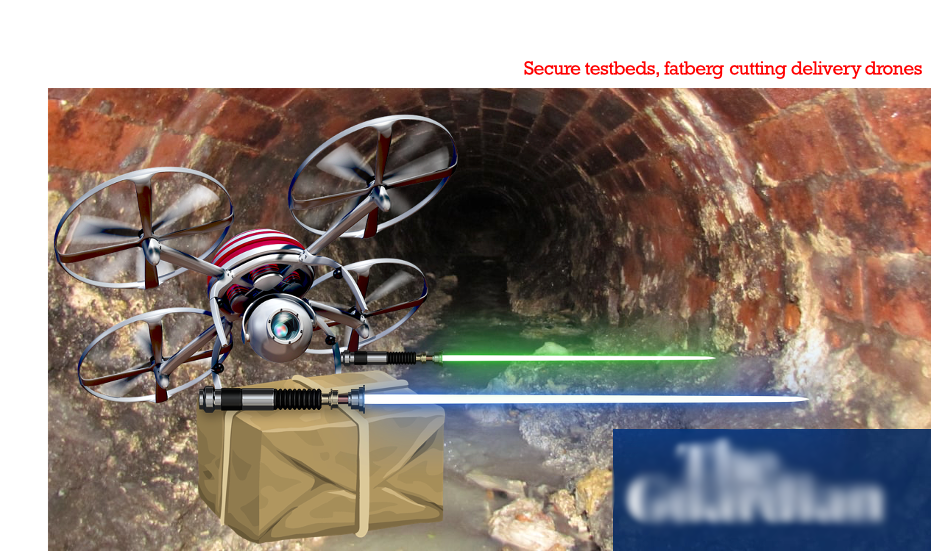
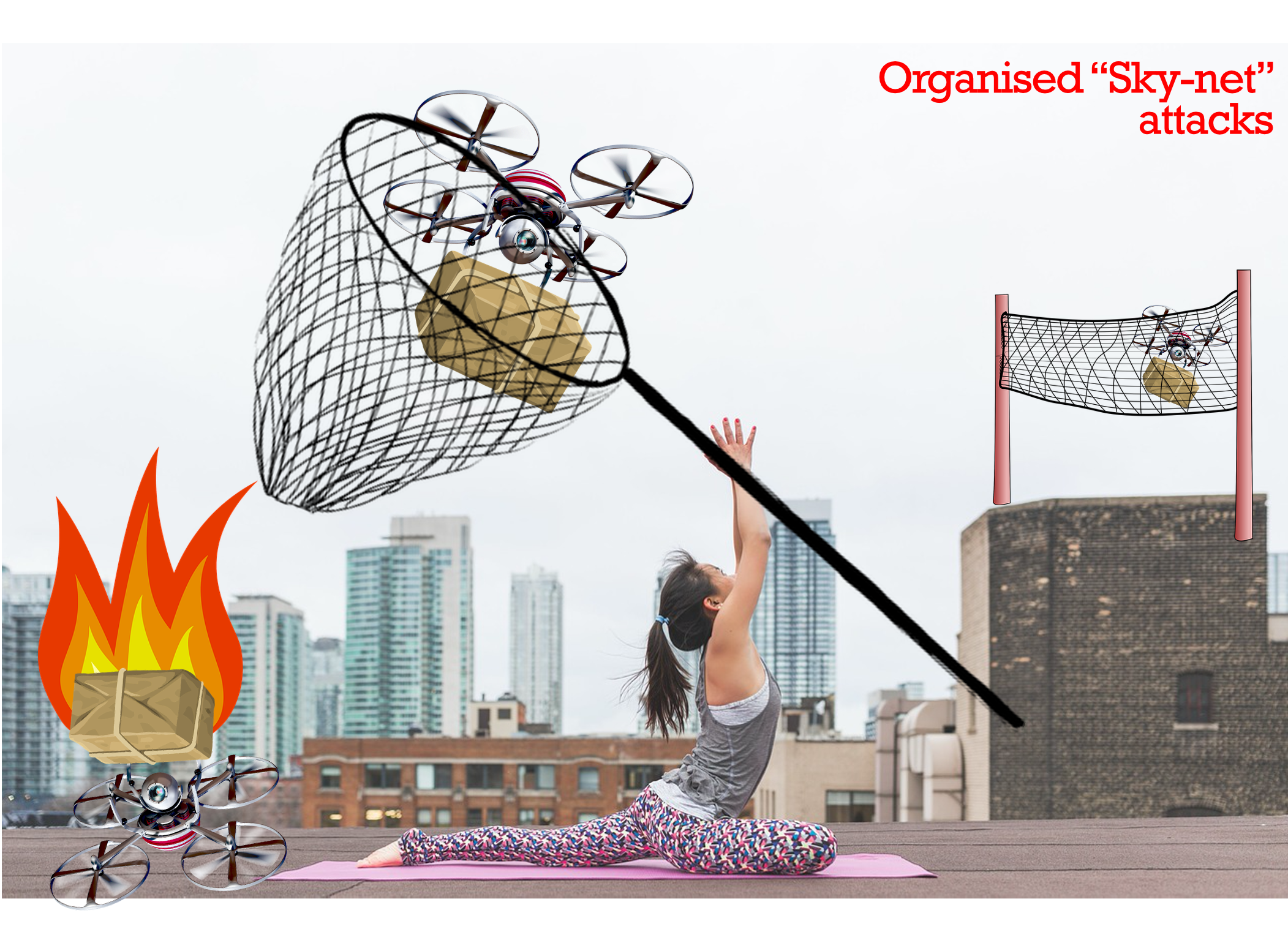
Collective action against the automation of last-mile logistics and “The Death of the Highstreet” is rising; “Sky-net” attacks against parcel drones in airspaces have quadrupled in the last decade (BBC Sept. 2032), and hacktivist groups repeatedly reroute empty AVUber taxis into Thames estuary (CNN, Oct. 2030). To maintain the flow of goods and services, the underbellies of our cities are used as ‘secure testbeds’, leading to the rapid development of fatberg cutting parcel drones and AV (Wired, Jan 2029). As an impact of basic income in the UK, free time is no longer a premium, perpetuating increased digitally mediated “civil disobedience” (e.g., anti-drone drones, the “Sky-net”). Work and labour became increasingly datafied between 2020 - 2025, leading to worker exploitation in these ubiquitous digital platforms, through holistic tracking of worker movements, practices, and behaviours. It has been hypothesised that business further leveraged this data (cf. surveillance capitalism) leading to the agency, work patterns, and intellectual property of the workers from this period becoming deeply ingrained in the autonomous society we now serve under. This paper aims to reconcile the role of technologists who “sit at a (slightly) higher plain of innovation and opportunity” (@HCI_technocrat_2F8cA, Twitter 12/23/33) by beginning to heal the broken social contract between the economy and the worker. Building on the framework of “Everyday Datafied Design” (Norman_bot and AI_xcF234, 2032) this paper presents qualitative deep learning study of ex-workers (n=328), presenting three new principles for designing resistance into digital services as a productive societal role.
The abstracts from the other authors
A case study of gig workers as responsible moral centres of semi-automated systems.
International Institute for Responsible Automation
Recent high-profile incidents involving improper use of automated work-allocation systems demonstrate a misunderstanding of corporate responsibility. In this case study of the recent cyber terrorist attack (“The Gig Gig”), where a group of extremists exploited a corporate payroll server to steal funds (e.g., Argyll, 2022), we explore how the public misattributed blame and restate the vital role gig workers play as moral centres. The dominant argumenton social media that preceded was that the terrorist groups were enabled and supported by corporations in their acts, using a series of instructional content on digital platforms to develop the skills necessary to carry out these attacks, and that the attackers were radicalised by systems that suggested increasingly extreme content based on their interaction history. We explore this misunderstanding and demonstrate that responsibility rests with independent contractors, hired on extreme short contracts (“gig workers”), who are used to efficiently classify and categorise content on these platforms. This is done through a series of tagging tasks with excerpts of content, through a game interface where contractors compete to classify accurately and quickly for financial reward. Since these contractors independently made the decision to classify material used in preparation for the attack, it therefore follows that they ultimately be held responsible for the resulting misuse. Although platforms host the content, it would neither be accessible, or semantically linked, if not for the work performed. We propose design recommendations that ensure that such contractors are correctly held accountable for the effects of their actions.
‘No Teacheroober!? How would I make time to get a job?’ The augmented and ‘naked’ final year experience compared.
School of Critical Higher Education Design (CHED)
The 2024 Abacus Revolution’s market deregulation policies has seen innovation in the ‘gig lecturer’ market, with 98% of UK students using learning support apps (Think and Sketch 2028) in dissertation writing. Auto-writing and deep-research software enables app-tutors (normally academic staff and unemployed graduates) to co-write up to 400 student dissertations simultaneously, costing between £250 - £1100 per essay (Stuart & Shatner 2028, Teacheroober 2026). Academic support apps were banned for final year students at Sony TRUMP University in 2028. Research showed that these students have worse post-grad employment outcomes in the first month (Teacheroober et al. 2029). Here, we examine the impact of the ban on staff. We surveyed 75% of the teaching staff (£50 reward card given) with 1 hour, semi-structured chatbot interviews. The paper presents three key finding truth insights: Disruption to academic research teaching staff piggy-backed their contract research through their student base and the app; Workload increase - the student’s ‘writing and research ability is crippled’. Tutors are having to ‘take students back to first year basics’; Decrease in income - ‘my bread and butter was gig lecturing’… ‘I am saving for a private rented flat, I think I’ll be based in my car for another year at least UK HE cannot ban learning support apps without large scale investment. At this point, it’s now the backbone of the education market-place. Forcing students to learn is an affront to their freedom.
The grand challenge revisited: protecting creativity professional’s workers’ rights
Centre for Creativity and Innovation in Economics
Twenty years have passed since HCI researchers were tasked with the grand challenge to develop creativity support tools (Shneiderman 2009), and since then the landscape has radically changed. With the advent of adaptive interfaces that automatically adjust tools to the designers’ needs, recent development focus has shifted towards the tools that automate creative task assessment (e.g., creativityindexer.org). While those tools simplify the work of researchers seeking to support creative practices, the transformation of the entire industry has led to a worrisome state of the worker’s rights.Specifically, the flourishment of crowdsourcing design platforms in the last decade see now 63% of creative professionals to be in temporary, freelance, or self-employed positions (Deloitte 2028), without appropriate protection and security for their future. In this paper, we report on an interview study with thirteen design professionals in non-permanent contract situations and shed light on how the subtle change of the creative process over the past decade has changed their work practice. Analysing the results, we reframe the initial grand challenge of building creativity support tools as a challenge to incorporate considerations of workers’ rights and protection for creative practice. Based on our review how the increased automation of creative tasks, their support tools, and the evaluation of creative work has changed this practice, researchers can no longer be agnostic of the political and economic implications that their work has on the affected workforce; an insight that was overlooked a decade ago.
This work was published in a short form at the “Halfway to the Future” Symposium in 2019.
Tools and frameworks
Speculative Design, Design Fiction, Futures, Fictional Abstracts